Tesla’s Optimus, NVIDIA’s Hype, and the Reality Gap in Humanoid Robotics
Elon Musk’s Optimus and industry optimism clash with expert caution, showing that AI‑driven humanoid robots still face major technical hurdles that may delay commercial rollout.
 BuildPreview AI Desk
4 min read
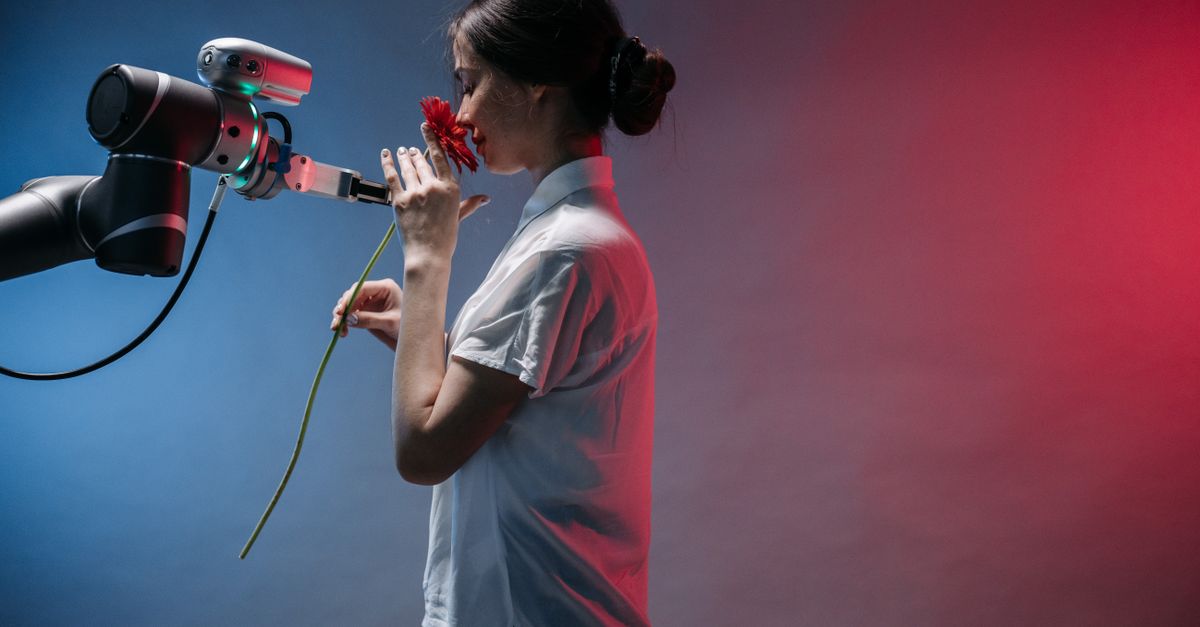
Elon Musk announced that Tesla’s Optimus humanoid robot would be available to consumers by the end of 2027, a claim that clashes with the cautious tone of leading AI researchers.
Key points
- Tesla’s Optimus could cost as little as $20,000, Musk says.
- Andreessen, Huang, and Morgan Stanley project a $5 trillion humanoid market by 2050.
- LeCun warns that current AI models lack the physical intuition for real‑world tasks.
- Jonathan Hurst argues that appearance is easy; dynamic movement is hard.
- Google DeepMind’s ALOHA 2 demonstrates that simple hardware can test advanced control.
What happened
At Tesla’s Q2 2026 earnings call, Musk described Optimus as “not just Tesla’s biggest product ever, but probably the biggest product ever.” He outlined factory‑floor duties, from sheet‑metal handling to repetitive assembly, and promised home‑use tasks such as vacuuming and meal prep. Musk projected a retail price near $20,000 and a public launch by 2027, citing internal milestones in dexterity and safety.
Meanwhile, Andreessen repeated that robotics could become “the biggest industry in the history of the planet” and Nvidia’s Jensen Huang claimed that humanoids would match human‑level ability within the year. Morgan Stanley’s forecast of 1 billion humanoid robots by 2050, worth over $5 trillion, fed the hype. Yet, at the January Davos conference, LeCun bluntly stated, “None of those companies … has any idea how to make those robots smart enough to be useful.” Hurst added, “It is dramatically more difficult to make a machine that moves or behaves dynamically or physically like a person.”
The backstory
Robotics research has long wrestled with the gap between perception and action. Generative AI’s 2023 breakthroughs, such as ChatGPT and Claude, sparked optimism that language‑based models could translate into physical dexterity. Yet the field has produced a handful of demonstrators—Boston Dynamics’ Spot, the DARPA Robotics Challenge finalists—none of which achieved full generalist capability. DeepMind’s ALOHA 2, a low‑cost bimanual platform, illustrates that sophisticated control can be built on modest hardware, but still relies on engineered pipelines rather than end‑to‑end learning.
Technical hurdles
Even the most advanced neural networks struggle to map high‑dimensional sensory streams to precise motor commands without a physics model. Current visual‑language transformers excel at pattern recognition but lack embodied experience; they cannot anticipate contact forces or compliance in real time. Moreover, safety certification for household robots demands thousands of failure‑mode tests, a logistical nightmare for a $20,000 device. The ALOHA 2 platform sidesteps these issues by using proprioceptive sensors and a rule‑based controller, but it cannot scale to the fluidity required for tasks like ironing or cooking. Until a learning algorithm can generalize across diverse objects and environments, humanoids will remain specialized, not generalist.
Market implications
High‑profile announcements inflate expectations, yet the capital expenditure for factory‑floor deployment already exceeds $1 billion per unit in the best‑case scenario. If Optimus is priced at $20,000, the cost of training, maintenance, and safety compliance would push the total cost of ownership beyond the savings from labor displacement. Venture capitalists may over‑allocate funds to early‑stage prototypes, while incumbents in automation—industrial robotics and warehouse automation—continue to dominate low‑cost, task‑specific solutions. The $5 trillion projected market by 2050 relies on a 1 billion unit sales figure that presumes a 20‑year adoption curve; current timelines suggest that mass adoption will lag until 2035 at the earliest. In the meantime, businesses should focus on niche, high‑value applications and partner with research labs to pilot prototypes.
What builders and businesses should do
- Evaluate whether a $20,000 robot justifies the labor cost savings in your process.
- Pilot simple, repeatable tasks (e.g., bin‑sorting) with existing collaborative robots before investing in humanoids.
- Partner with university labs or startups to gain early access to prototype testbeds like ALOHA 2.
- Allocate budget for safety validation and regulatory compliance, not just hardware purchase.
- Monitor AI‑driven control research; consider integrating modular, sensor‑rich controllers rather than full‑body AI.
The bottom line
Watch Tesla’s production milestones in 2027 and Nvidia’s public demos in 2028. If deployment stalls, expect consumer‑grade humanoids to surface only after 2035, making early‑stage investment riskier than anticipated.