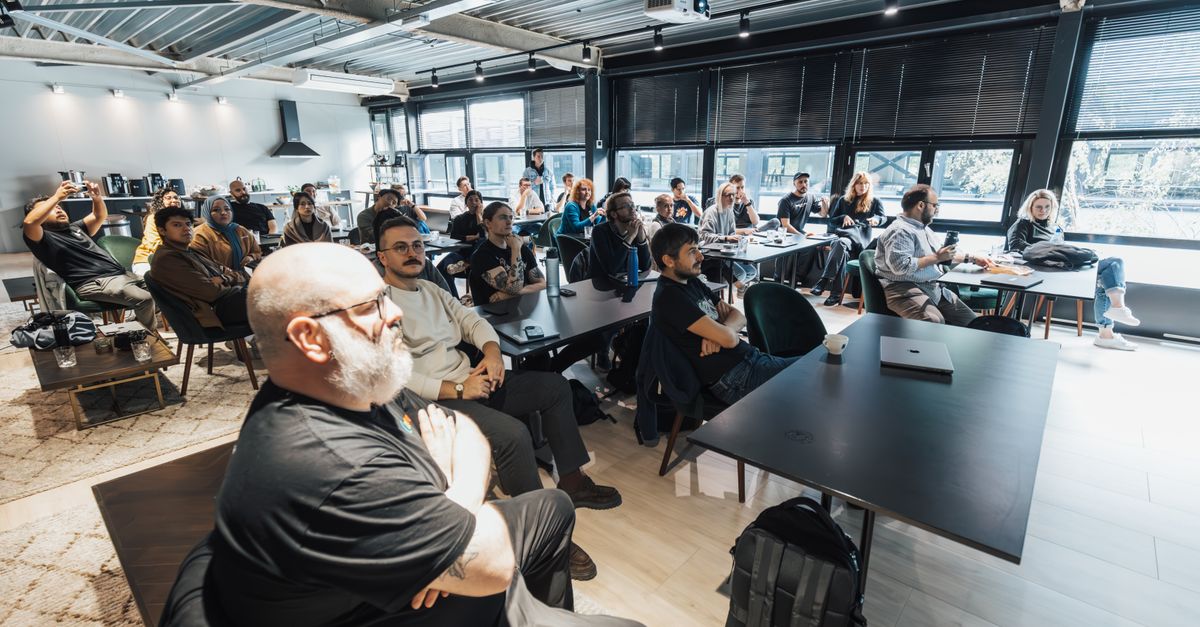
Simon Willison and Jesse Vincent host SF Agentic Engineering meetup on Oct 14
A San Francisco gathering on Oct 14 lets developers showcase early-stage coding‑agent experiments, offering insight into emerging AI‑driven development workflows.
 BuildPreview AI Desk
4 min read
Simon Willison announced a San Francisco evening meetup with Jesse Vincent on Wednesday, Oct 14, 2026, inviting developers to share odd experiments built on coding agents. The event promises a flowing conversation where participants exchange lessons, potentially accelerating the adoption of agentic AI in software pipelines.
Key points
- The meetup is scheduled for Oct 14, 2026, in San Francisco.
- Co‑host Jesse Vincent will join Simon Willison.
- Attendees are expected to discuss unfinished or unpublished projects.
- No formal presentations are required; a show‑and‑tell format is encouraged.
- The focus is on early‑stage exploration, not product pitches.
What happened
Simon Willison posted a link on Sep 23, 2026, describing the evening event with Jesse Vincent. He framed the gathering as a "Birds of a Feather" session for people building "weird and interesting things with and on top of coding agents." The announcement emphasized an informal, flowing conversation where anyone could share what they are trying, what they have learned, and what remains unsolved. Willison wrote that the event is not about product pitches, stating, "This isn't about product pitches, it's about much earlier explorations than that."
The invitation called for participants to bring odd experiments or unfinished projects that lack a clear market. Willison noted that sharing something you are working on is encouraged, but a formal presentation is not required. The event aims to create a safe space for developers to compare notes and experiment without commercial pressure. No venue details were disclosed, but the timing and city were fixed, signaling a concrete opportunity for the local AI‑focused community.
The backstory
Coding agents—software that can generate, modify, or execute code autonomously—have moved from research prototypes to tools that developers experiment with in production environments. Over the past two years, open‑source frameworks and commercial platforms have lowered the barrier to building agentic systems that can assist or replace parts of the software development lifecycle. Community meetups have emerged as informal venues for sharing breakthroughs, failures, and novel use cases that are too early for product announcements.
Simon Willison, a well‑known advocate for open data and modern web tooling, has hosted similar events that focus on nascent technologies. Jesse Vincent, a veteran of open‑source infrastructure projects, brings experience in building developer‑centric platforms. Their collaboration reflects a broader trend where thought leaders curate spaces for peer‑to‑peer learning, especially around AI‑driven tooling that has yet to mature into marketable offerings.
Why early‑stage experimentation matters
Focusing on unfinished or unpublished work allows participants to surface practical challenges that are invisible in polished product demos. Issues such as prompt brittleness, safety guardrails, and integration friction often surface only when developers push agents into real‑world codebases. By surfacing these pain points early, the community can collectively iterate on best practices, reducing the time needed for later adopters to reach stable deployments.
The informal format also lowers the barrier for newcomers who may lack polished prototypes but possess valuable insights. When participants compare notes, they can identify recurring failure modes or unexpected benefits, creating a shared knowledge base that accelerates the overall maturity of agentic engineering.
Potential impact on development pipelines
If the insights shared at this meetup translate into reusable patterns, organizations could embed coding agents into continuous integration pipelines sooner than planned. Early adoption may shorten development cycles by automating routine refactoring or bug‑fix generation, freeing engineers to focus on higher‑level design work. However, premature integration without robust safety checks could introduce hidden bugs or security exposures, underscoring the need for disciplined testing.
Companies that monitor such community gatherings can spot emerging techniques before competitors, positioning themselves to adopt proven methods when the technology stabilizes. Conversely, firms that ignore the grassroots discourse risk falling behind as agentic tooling becomes a standard component of modern DevOps stacks.
What builders and businesses should do
- Attend the meetup or similar events to capture emerging patterns before they become mainstream.
- Document any reproducible agentic workflows and share them internally to build organizational expertise.
- Prioritize safety testing for any code‑generation agent integrated into production pipelines.
- Evaluate whether early‑stage agentic tools can reduce repetitive coding tasks in your current development process.
- Track community‑driven best‑practice repositories for updates on prompt engineering and model alignment.
The bottom line
Watch for follow‑up blog posts or open‑source releases from attendees in the weeks after Oct 14, as they will likely signal the next wave of practical agentic tooling.