Former Apple Retail Chief Ron Johnson Rejects Silicon Valley Bet on AI-Driven Shopping
Ron Johnson argues buyers will not delegate high-stakes purchases to autonomous AI agents, warning tech giants that agentic commerce cannot replace physical store evaluation and human staff.
 BuildPreview AI Desk
4 min read
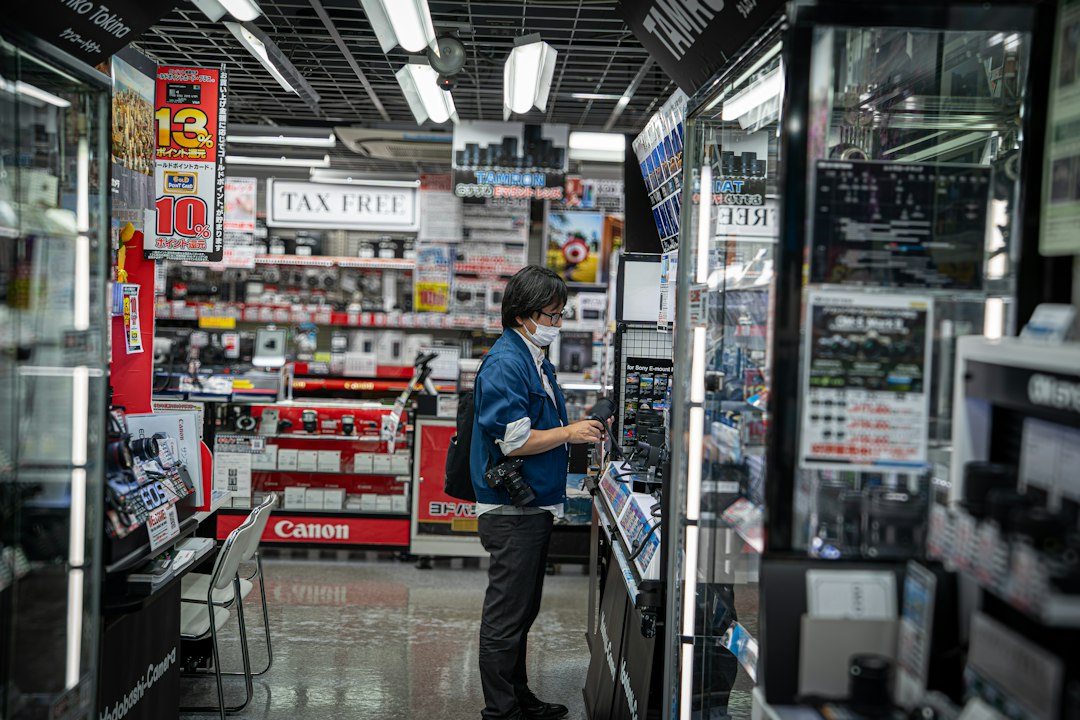
Ron Johnson, the former Apple executive who built the company's brick-and-mortar retail network, is pushing back against Silicon Valley's multi-billion-dollar push into agentic commerce. Speaking in an interview with TechCrunch, the 66-year-old retail strategist argued that autonomous AI shopping agents will fail to replace physical retail for significant consumer purchases like premium laptops, because software cannot replicate tactile evaluation or human trust.
Key points
- Former Apple retail chief Ron Johnson argues consumers will not delegate high-ticket purchases to automated AI shopping agents.
- Tech giants like Google and OpenAI are pouring resources into autonomous discovery and checkout protocols.
- Johnson contends AI tools will inform consumers before store visits rather than replace brick-and-mortar showrooms entirely.
- Apple Stores succeeded by eliminating sales commissions and prioritizing hands-on product interaction over transactional pressure.
What happened
Silicon Valley software vendors are racing to automate consumer commerce from search through checkout. Google has introduced its Universal Commerce Protocol to standardize agentic purchasing, while OpenAI continues turning ChatGPT into a merchant discovery and transaction platform. These architectures assume shoppers will increasingly offload product evaluation and procurement directly to algorithms.
Johnson dismisses the idea that consumers will allow an agent to buy a $1,000 or $2,000 laptop sight unseen. Customers need to hold hardware, assess screen quality, and weigh form factors in person. In Johnson's view, autonomous systems will serve primarily as discovery filters that prepare buyers for physical store visits rather than replacing the trip entirely.
His skepticism, published alongside his book *Shop Different: How Retail Revealed Apple’s Genius*, outlines why previous tech-driven retail disruptions stopped short of eliminating physical storefronts. While competitors cloned Apple's minimalist glass layouts and Genius Bar setups, Johnson argues they failed to replicate the human staffing model that drove customer loyalty.
The backstory
Johnson joined Apple in 2000 to construct its retail network during the initial dot-com e-commerce wave, when analysts widely predicted the extinction of physical electronics shops. Apple responded by stripping sales commissions from store employees, shifting the floor staff's incentives toward customer education and hardware support rather than fast commission closures.
Johnson's record outside Cupertino, however, highlights the complexity of retail transitions. In 2011, he took over department store chain J.C. Penney to execute a sweeping modernization, but the board ousted him within two years following steep revenue declines. He later founded Enjoy Technology, a home delivery and tech setup service that filed for Chapter 11 bankruptcy in 2022 before selling its assets to Asurion.
The limits of agentic purchasing
Agentic commerce works cleanly for commoditized replenishments—printer ink, standard cables, or repeat household goods where specifications are fixed and risk is negligible. High-ticket hardware and experiential products break that algorithmic efficiency. High-cost items carry psychological and tactile friction that pure parameter-matching cannot resolve.
TechCrunch quotes Johnson stating that "AI will never be able to have you physically experience a product." When tech vendors pitch end-to-end autonomous checkout as the default future of retail, they confuse information aggregation with purchasing conviction. AI reduces research time by summarizing benchmarks and user sentiment, but customer confidence for expensive gear often requires physical verification.
Software metrics versus retail realities
Silicon Valley often views retail transactions as friction problems waiting for protocol-level solutions. Yet retail profitability frequently hinges on after-sale satisfaction, device onboarding, and brand trust—areas where algorithmic handoffs introduce new points of failure. If an autonomous agent misjudges keyboard travel, thermal performance, or chassis rigidity, the retailer absorbs the return cost.
Apple understood that store employees acting as advisors reduced friction more effectively than aggressive sales tactics. TechCrunch quotes Johnson noting that "the secret sauce for Apple has always been its people, the people in the store, and how they treat the customer." Venture capital and platform companies backing automated commerce protocols risk building frictionless buying paths for inventory that shoppers still insist on touching first.
What builders and businesses should do
- Treat AI shopping agents as top-of-funnel research engines rather than total replacements for physical or interactive touchpoints.
- Optimize digital product feeds for machine readability through structured protocols, but preserve easy paths to live demonstrations.
- Avoid spending capital to automate complex, high-consideration purchases where return rates and tactile requirements dominate customer satisfaction.
- Train customer-facing teams to support shoppers who arrive at physical stores pre-briefed by AI summaries.
The bottom line
Expect AI shopping agents to dominate routine, low-risk replenishment, but track whether physical store foot traffic remains resilient as enterprise hardware and premium consumer devices hit the market.