Huawei Pulls Forward Ascend 960DT AI Chip Launch to Early 2027
Huawei moved its Ascend 960DT accelerator to Q1 2027, accelerating custom interconnect hardware to counter Nvidia despite scaling back individual SuperPoD chip counts.
 BuildPreview AI Desk
4 min read
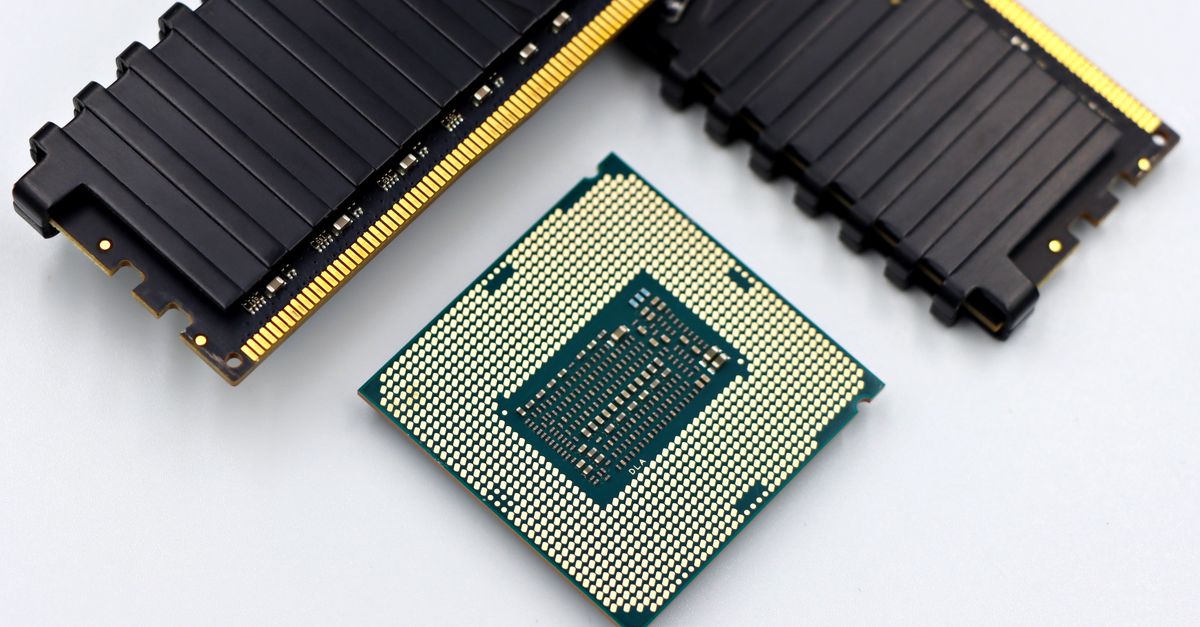
Huawei is moving the launch of its next-generation Ascend 960DT AI processor up to the first quarter of 2027, accelerating its timeline to challenge Nvidia in high-performance computing. David Wang, Huawei's rotating and acting chairman, announced the revision at the company's annual Huawei Connect conference. The company had originally slated the accelerator for release in the third quarter of 2027 before pulling the schedule forward by two quarters.
Key points
- Huawei advanced the Ascend 960DT launch date from Q3 2027 to Q1 2027.
- The company introduced Peerium Computing Architecture and UnifiedBus to network massive accelerator clusters.
- Huawei stated its Atlas 950 SuperCluster can scale to connect up to 256,000 accelerator cards.
- China tech analyst Rui Ma noted the Atlas 960 SuperPoD was reduced from 15,488 chips to 4,096 chips.
- The schedule shift precedes a bilateral meeting between US President Donald Trump and Chinese President Xi Jinping.
What happened
Huawei used its Huawei Connect stage to present an accelerated roadmap for its flagship semiconductor designs. A Huawei spokesperson told TechCrunch that "Ascend 960 chips are launching ahead of schedule, doubling performance and advancing year by year." The company is pairing this silicon schedule with systems-level networking upgrades designed to aggregate massive numbers of processors into coherent supercomputers.
At the center of this engineering effort is what Huawei terms its Peerium Computing Architecture. Powered by proprietary UnifiedBus technology, the framework links processors directly with memory, storage, and networking hardware. Eric Xu, Huawei's rotating chairman, confirmed in a corporate statement that the architecture targets large-scale systems built for concurrent training and inference workloads. The hardware manifestation of this design begins with the Atlas 950 SuperPoD and SuperCluster, with the company claiming the SuperCluster can link as many as 256,000 accelerator cards.
Despite the aggressive silicon schedule, external observers noted a technical discrepancy in Huawei's system-level deployment plans. China tech analyst Rui Ma pointed out on X that previous company guidance described an Atlas 960 SuperPoD capable of housing 15,488 chips. In contrast, the updated announcement detailed a footprint of 4,096 chips, revealing that while the underlying silicon is arriving earlier, individual pod densities have shrunk.
The backstory
The revised timeline arrives during prolonged US export controls designed to restrict Chinese access to advanced semiconductor fabrication and western AI chips. Despite heavy trade sanctions targeting its supply chains, Huawei has steadily invested in domestic production substitutes and custom networking alternatives.
Geopolitical dynamics remain directly tied to these semiconductor milestones. The announcement surfaced just one week before a scheduled September 24 meeting in Washington, DC, between US President Donald Trump and Chinese President Xi Jinping. Trump has consistently rejected calls from domestic industry executives to moderate the pace of AI deployment over safety concerns, citing the strategic requirement to maintain a decisive lead over China. Eric Xu countered that Chinese developers must advance technical development rapidly to understand real-world operational risks, arguing that technical parity precedes effective safety governance.
Interconnect architecture meets physical scaling reality
Huawei's pivot toward custom bus topologies reveals how the company intends to bypass advanced fabrication bottlenecks. When raw transistor density cannot match competitors due to lithography sanctions, system builders compensate by expanding the interconnect fabric. UnifiedBus and Peerium represent an attempt to make thousands of discrete accelerators function as a unified compute engine.
Yet the reduction in SuperPoD density from 15,488 to 4,096 chips exposes trade-offs. Shrinking the SuperPoD configuration suggests that thermal limits, yield constraints, or interconnect overhead forced Huawei to scale back packaging density. Moving launch dates earlier often requires companies to sacrifice complex multi-chassis packaging targets in favor of smaller, more reliable clusters. Huawei gains an earlier market footprint with the Ascend 960DT, but infrastructure teams will need to deploy more individual pods to reach their target compute capacities.
The race for infrastructure self-sufficiency
Accelerating the Ascend 960DT roadmap signals that Chinese enterprise demand for domestic alternatives is outstripping previous projections. Analysts view the push toward sovereign silicon as an irreversible structural shift rather than a temporary workaround. Ma observed that "it’s futile to stop China’s development in semiconductors because the stakes for self-sufficiency are just too high at this point."
For enterprise buyers within China, Huawei represents the primary domestic alternative to restricted Nvidia accelerators. By committing to annual performance doublings and shipping products ahead of schedule, the vendor is attempting to convince domestic hyperscalers and state-backed laboratories to build foundational models on Ascend silicon rather than relying on gray-market foreign hardware.
What builders and businesses should do
- Track the technical divergence between Nvidia's NVLink ecosystem and Huawei's UnifiedBus when architecting distributed training clusters.
- Audit model codebases for portability, ensuring training scripts can target alternative accelerator instruction sets without prohibitive refactoring costs.
- Account for smaller node cluster sizes in infrastructure capacity planning if evaluating non-western accelerator hardware.
- Monitor trade policy outcomes from bilateral diplomatic talks to assess future supply chain continuity for compute procurement.
The bottom line
Huawei is trading pod density for faster silicon delivery to secure domestic AI market share ahead of tightening export policies. Watch whether early 2027 deployments sustain claimed interconnect performance when the hardware reaches large-scale production environments.