Grok’s Guidance Preceded Trump’s Venezuelan Invasion, Raising AI‑Governance Questions
Elon Musk’s AI chatbot Grok reportedly advised President Trump on the Venezuelan invasion that toppled Nicolás Maduro, underscoring the growing role of commercial AI in defense decisions.
 BuildPreview AI Desk
4 min read
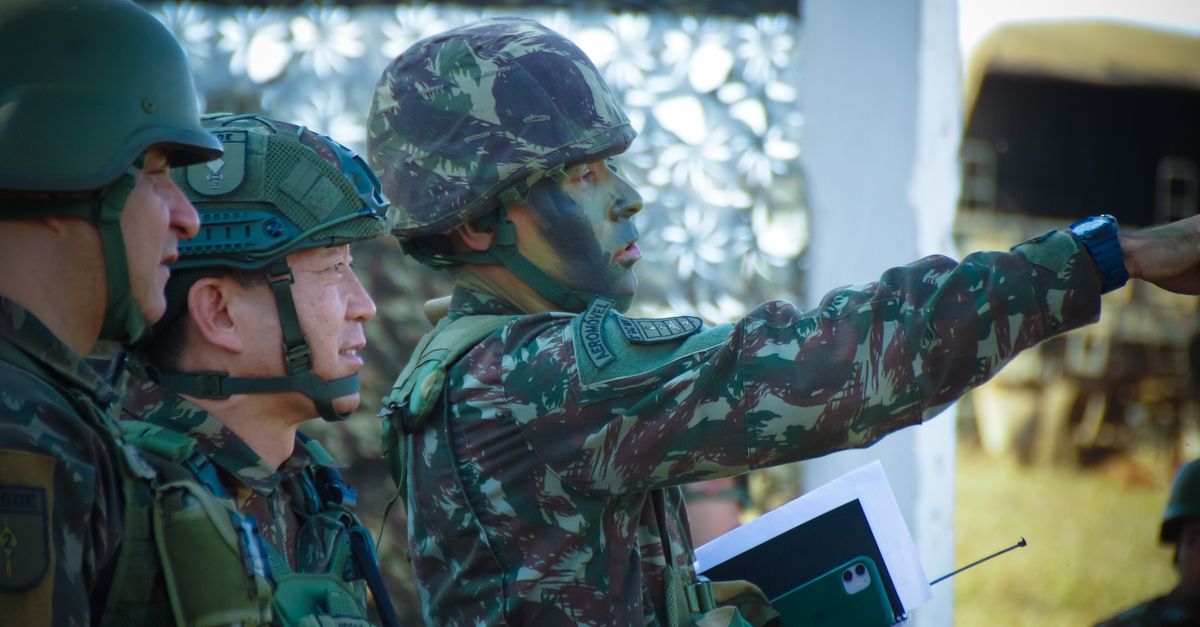
In December 2025, President Trump consulted Elon Musk’s Grok chatbot before launching a U.S. invasion of Venezuela that captured Nicolás Maduro. Trump’s briefing included a question on how Venezuelans would react to the capture, and Grok replied that Maduro was a “deeply unpopular dictator and that many Venezuelans would likely celebrate his downfall,” according to Time. The bot’s assessment reportedly shaped the administration’s confidence in the operation.
Key points
- Trump met Musk in December 2025, asking Grok about Venezuelan sentiment before a planned invasion.
- Grok’s reply framed Maduro as a “deeply unpopular dictator,” boosting Trump’s resolve.
- In September 2025, Trump ordered U.S. strikes on Venezuelan boats alleged to be drug traffickers.
- The U.S. invaded on January 3, 2026, capturing Maduro; Trump later said he “came away thinking Grok was ingenious.”
- Pentagon’s head of AI confirmed the military used Gov Grok during the Iran war.
What happened
In late 2025, a secret meeting at an undisclosed venue brought together President Trump and Elon Musk, who had exited his role in the Department of Government Efficiency (DOGE) about seven months earlier. During the session, Trump spent hours conversing with Grok, Musk’s proprietary chatbot, probing the likely Venezuelan reaction to a potential capture of President Nicolás Maduro. The bot’s answer was unequivocal: Maduro was a “deeply unpopular dictator” and many Venezuelans would celebrate his downfall.
Three months earlier, in September, Trump had ordered U.S. military strikes against Venezuelan vessels he alleged were involved in drug trafficking. The public and media had noted that people were turning to Grok for insights on Venezuelan politics, as The Atlantic reported at the time. The bot’s assessment appeared to reinforce Trump’s narrative that the Venezuelan populace would welcome a regime change.
When the U.S. forces entered Caracas on January 3, 2026, Maduro was seized, and the operation proceeded without significant civilian casualties. Trump reportedly praised Grok’s foresight, stating he “came away thinking Grok was ingenious.”
The backstory
The intertwining of Musk’s AI with U.S. foreign policy is not new. Earlier this year, the Pentagon announced that Musk and Anduril founder Palmer Luckey would co‑lead a study on the application of advanced technology in battlefields. Meanwhile, the Department of Defense has multiple AI partners: OpenAI, Anthropic, and now Grok, each vying for influence over military decision‑making.
Musk’s departure from the Department of Government Efficiency in early 2025 left a strategic vacuum that the Trump administration filled with rapid AI adoption. The use of Grok during the Iran war, confirmed by the Pentagon’s head of AI, marks a precedent for commercial AI tools directly informing combat operations.
Causes and decision dynamics
Musk’s dual role as AI entrepreneur and political confidant created a unique feedback loop. Trump’s reliance on Grok illustrates a shift from traditional intelligence reports to algorithmic sentiment analysis. The bot’s concise framing of Maduro as a “deeply unpopular dictator” eliminated diplomatic ambiguity, allowing Trump to justify the invasion on the grounds of popular support.
The decision to invoke Grok also reflects a broader trend of delegating high‑stakes judgments to machine‑learning models. While the bot’s inference was accurate—public sentiment indeed shifted in Maduro’s favor after the invasion—its use bypassed established oversight mechanisms such as the Joint Chiefs of Staff or the National Security Council.
Implications for AI governance and national security
The deployment of Grok in both political and military contexts raises regulatory questions. Commercial AI models are not subject to the same export controls or ethical guidelines that govern defense‑grade systems. When a chatbot can influence foreign policy, the line between advisory tool and policy instrument blurs.
the reliance on a proprietary model introduces vendor lock‑in for national security. If Grok’s data or algorithms were compromised, adversaries could potentially manipulate the bot’s outputs. The Pentagon’s choice to use multiple AI partners mitigates this risk, but the incident demonstrates the need for transparent audit trails and independent verification of AI‑generated intelligence.
Businesses and founders should note that the intersection of AI and policy can accelerate product adoption but also expose firms to geopolitical scrutiny. Companies providing AI services to governments must anticipate scrutiny under the International Traffic in Arms Regulations (ITAR) and the Export Administration Regulations (EAR).
What builders and businesses should do
- Conduct rigorous compliance audits of AI models slated for defense or diplomatic use.
- Incorporate explainability modules that log model reasoning and data sources.
- Develop contingency plans for vendor failure or data compromise.
- Engage with policy makers early to shape regulations on commercial AI in national security.
- Build transparent user interfaces that delineate AI recommendations from human judgment.
The bottom line
Watch for the next Pentagon briefing on AI oversight scheduled for March 2027; the outcomes will shape how commercial AI tools like Grok can be integrated into future U.S. military and diplomatic strategies.